
When couples struggle to conceive, the focus often falls on women — but in nearly half of all infertility cases, male factors play a significant role. Male infertility can be caused by a range of issues, from hormonal imbalances to lifestyle habits, yet with modern medical advances, most cases are treatable. At Gynae Fertility & IVF Centre, we provide compassionate, discreet, and effective solutions to help men understand and overcome fertility challenges. This guide explores the causes, diagnosis, and treatment options for male infertility — and how timely care can restore hope.
Understanding Male Infertility
Male infertility occurs when a man’s reproductive system has difficulty producing healthy sperm or delivering it effectively for fertilization. It is diagnosed when conception does not occur after one year of regular, unprotected intercourse, and the cause is traced primarily to the male partner.
While the condition can be emotionally challenging, advances in reproductive medicine now offer a wide range of treatments – many of which can lead to successful conception, either naturally or through assisted reproductive techniques.
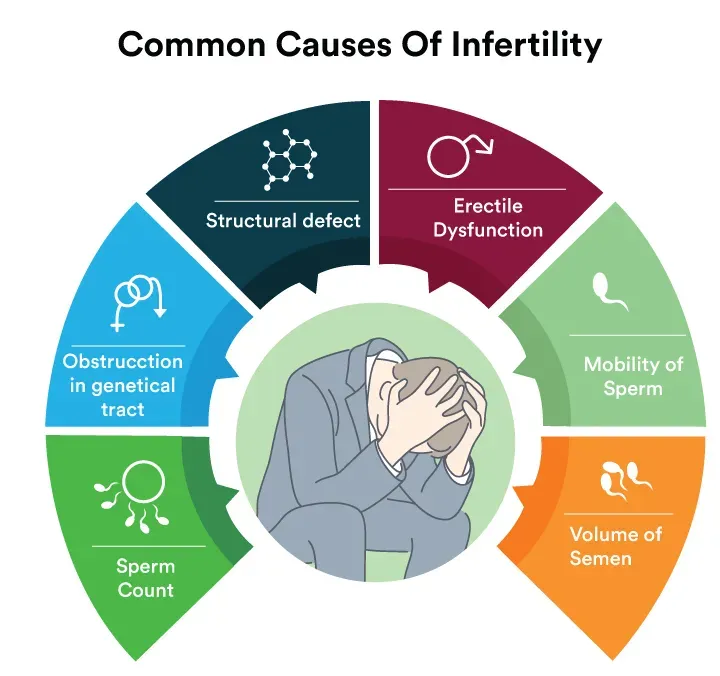
Common Causes of Male Infertility
- Low Sperm Count (Oligospermia)
A low sperm count reduces the likelihood of fertilizing an egg. Causes may include hormonal problems, genetic conditions, infections, or testicular damage. - Poor Sperm Motility (Asthenozoospermia)
Sperm must swim efficiently to reach and fertilize the egg. Poor motility can be caused by infections, inflammation, or structural abnormalities. - Abnormal Sperm Morphology (Teratozoospermia)
Sperm with irregular shapes or defects may not penetrate the egg properly, affecting fertilization success. - Hormonal Imbalances
Low levels of testosterone or other reproductive hormones can interfere with sperm production. - Varicocele
This is a swelling of veins within the scrotum, leading to increased temperature and reduced sperm quality. It is one of the most common reversible causes of male infertility. - Infections
Sexually transmitted infections (STIs) or untreated bacterial infections can damage sperm-producing tissues or block sperm pathways. - Genetic Disorders
Certain genetic abnormalities, such as Klinefelter syndrome or Y-chromosome deletions, can affect sperm production. - Lifestyle and Environmental Factors
Smoking, alcohol use, obesity, drug abuse, excessive heat exposure, and chronic stress can significantly impact sperm health.
Diagnosis of Male Infertility
Accurate diagnosis is the cornerstone of effective treatment. At Gynae Fertility & IVF Centre, our specialists use a comprehensive approach that includes:
- Semen Analysis: Evaluates sperm count, motility, and morphology.
- Hormonal Testing: Measures testosterone, FSH, and LH levels.
- Scrotal Ultrasound: Detects varicoceles or blockages.
- Genetic Testing: Identifies inherited conditions affecting fertility.
- Post-Ejaculation Urinalysis: Checks for retrograde ejaculation.
These tests help us understand the underlying issue and design a treatment plan tailored to your specific needs.
Treatment Options for Male Infertility
- Lifestyle Modifications:
Simple changes can make a big difference. Maintaining a healthy weight, quitting smoking, limiting alcohol, reducing stress, and eating a balanced diet rich in antioxidants can improve sperm quality. - Medical Treatment:
Hormone therapy to correct imbalances.
Antibiotics for infections.
Medications to improve sperm production. - Surgical Treatments:
Varicocele repair to improve blood flow and sperm quality.
Vasectomy reversal for men who previously underwent the procedure.
Surgical sperm retrieval (TESA/PESA) for use in IVF or ICSI procedures. - Assisted Reproductive Techniques (ART):
IUI (Intrauterine Insemination): Healthy sperm are placed directly into the uterus.
IVF (In-Vitro Fertilization): Sperm and egg are combined outside the body, and the embryo is transferred into the uterus.
ICSI (Intracytoplasmic Sperm Injection): A single sperm is injected directly into an egg — especially useful for very low sperm counts or poor motility.
These technologies have revolutionized fertility treatment, making conception possible even in cases once considered untreatable.
Emotional and Psychological Support
Male infertility can affect more than just physical health — it often impacts self-esteem and relationships. At Gynae Fertility & IVF Centre, we provide confidential counseling to help individuals and couples cope with the emotional side of infertility, ensuring a supportive environment every step of the way.
Concerned About Male Fertility?
If you’ve been trying to conceive without success, it’s time to get answers. Our fertility specialists at Gynae Fertility & IVF Centre offer discreet evaluations and advanced treatment options tailored to your needs. Every journey begins with a conversation — and the first step toward parenthood starts here.
Click Here to book your consultation and take control of your reproductive health today.
Conclusion
Male infertility is more common than many realize, but with early diagnosis and proper treatment, most men can father children successfully. From lifestyle improvements to advanced techniques like ICSI and IVF, there are more options than ever to achieve your dream of parenthood. At Gynae Fertility & IVF Centre, our mission is to combine science, compassion, and expertise to help couples move from uncertainty to joy — one successful story at a time.
